AI conveyor monitoring is the use of industrial cameras and computer vision, processed at the edge, to continuously watch a conveyor and detect foreign objects and operational events in real time — raising alerts and feeding industrial systems without manual observation.
Conveyor and bulk material handling systems in steel, mining, coal, cement and port operations run continuously, often across long stretches that are difficult to observe. Manual monitoring is intermittent by nature. AI conveyor monitoring closes that gap by treating cameras as sensors.
Why conveyors are hard to monitor
A belt is a moving surface carrying variable material under dust, glare and vibration. Three things make it difficult to watch reliably:
- Distance. Belts run for hundreds of metres, often above ground or through enclosed galleries.
- Continuity. Operation is round the clock; events do not wait for a walk-down.
- Consequence. A foreign object that reaches a crusher or a transfer point stops the line.
Technology creates value only when it works reliably with machines, people, processes and real operational conditions.
How AI conveyor monitoring works
The system follows the same pipeline as every NIVOSK deployment: Input → Intelligence → Processing → Alert/Action.
- Input. Industrial cameras cover belt zones, transfer points and loading areas.
- Intelligence. Computer vision models interpret the stream — belt, material, and anything that should not be there.
- Processing. Detection runs at the edge so latency does not depend on plant connectivity.
- Alert / Action. Events reach operators as real-time alerts and integrate with PLC, SCADA and dashboards.
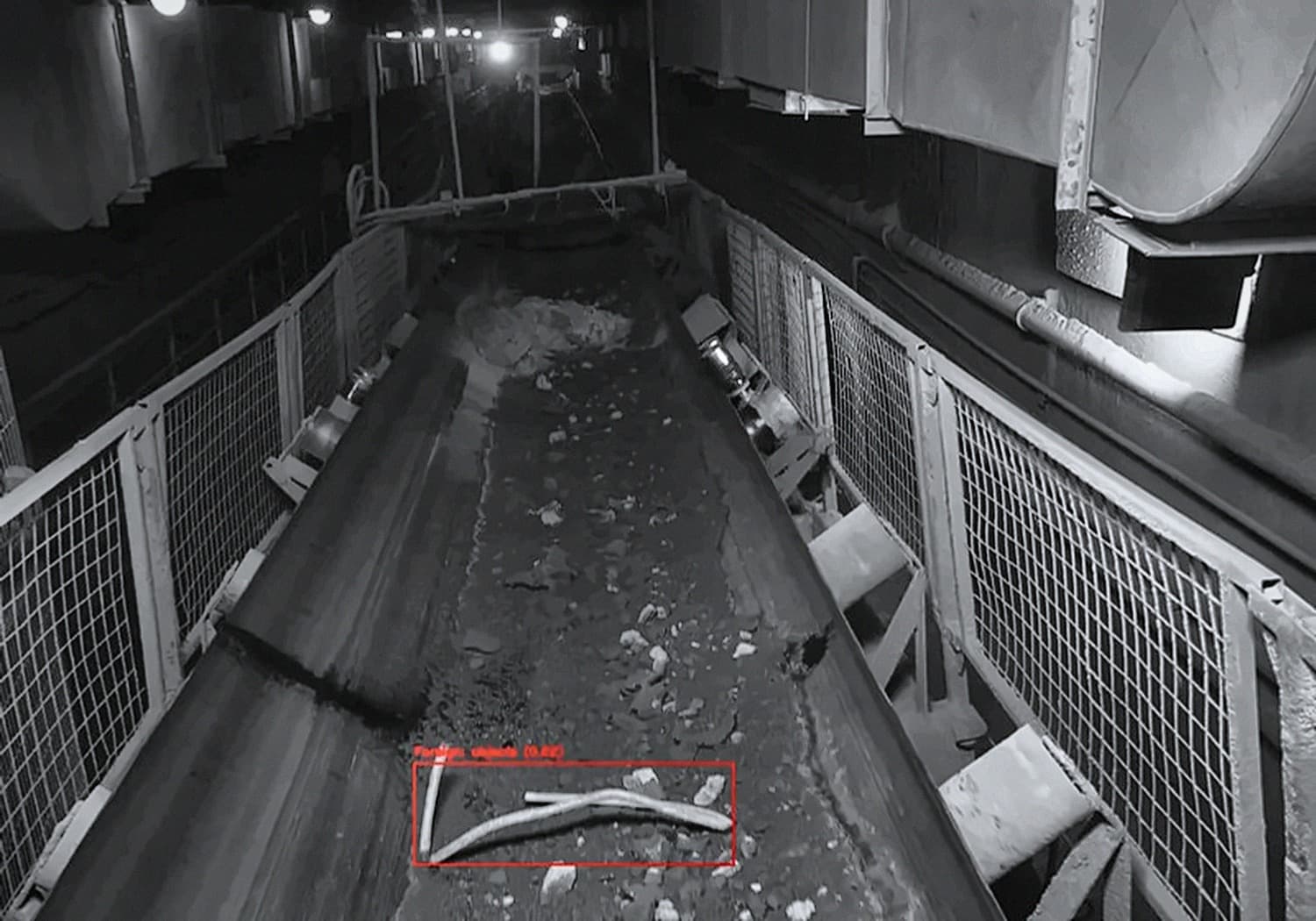
Each detection is emitted as a structured event, for example event.type = "foreign_object" with a zone, timestamp and confidence — the shape downstream systems can act on.
Edge processing is not an optimisation — it is what makes real-time alerts possible in plants where connectivity is intermittent.
Manual inspection vs AI vision
| Dimension | Manual inspection | AI vision |
|---|---|---|
| Coverage | Periodic walk-downs of accessible sections | Continuous, all covered zones |
| Detection | Depends on operator attention and visibility | Model-based, consistent across shifts |
| Latency | Discovered at the next inspection | Real-time alert at the event |
| Record | Logbook entries | Structured events with time, zone and evidence |
| Integration | Manual escalation | PLC / SCADA / dashboard integration |
What the system does not replace
Vision monitoring supports maintenance and operations teams; it does not remove the need for mechanical inspection, belt tracking or scheduled maintenance. It changes when people are called to the belt.
Deploying in a plant
Deployment follows Discover → Assess → Design → Develop → Integrate → Deploy → Scale. The assessment stage matters most for conveyors: camera positions, lighting, dust and the existing PLC/SCADA landscape decide the architecture.
Integration points
Cameras, PLC, SCADA, dashboards and existing enterprise systems. Alerts can drive alert-based automation where the site's control philosophy allows it.
Frequently asked questions
What is AI conveyor monitoring?
The use of industrial cameras and computer vision, processed at the edge, to continuously monitor a conveyor and detect foreign objects and operational events in real time.
Which industries use it?
Steel, mining, coal, cement, ports and bulk material handling operations — anywhere belts move material continuously.
Does it need cloud connectivity?
No. Detection runs on an edge node at the site; connectivity is used for remote monitoring and reporting where available.
How does it connect to existing systems?
Through industrial integration with PLC, SCADA, dashboards and existing enterprise systems.
Is Vizibelt an AI conveyor monitoring product?
Yes. Vizibelt is NIVOSK’s AI-powered monitoring solution for conveyor and bulk material handling environments.